

THE INSTITUTE OF CONSTRUCTION ADVISORS & CONSULTANTS
Beyond the Blueprint: Advancing Excellent in Construction
Conference agenda
January 12 & 13, 2027
DAY ONE
Times are in Eastern Time Zone
7:45AM – 8:30 AM
Registration & Breakfast
Conference Lobby – 4th Floor
8:30 AM – 8:40 AM
Executive Director Opening Remarks
ICAC Executive Director
8:40 AM – 9:30 AM
Keynote Speaker Session
Speaker: Kyle Majchrowski

Biography
Kyle Majchrowski, known for his ability to inspire and empower, delivers human-centric leadership and development. With 25+ years building design & construction capital project delivery teams as an Owner, Kyle emphasizes the importance of people. He is dedicated to fostering high-performing teams and unlocking the potential of individuals. Kyle’s approach is grounded in relatability to create connections and encourage powerful conversation. In addition to NexIntent, Kyle leads Ripple Intent, a non-profit organization committed to improving the lives of individuals and communities. He drives effective leadership through intention, self-awareness, continuous growth, and making a positive impact together.
Course Description
Keynote
9:30 AM – 10:20 AM
The $216,000 Question: Rethinking Compliance Monitoring on a Mega-Project
Speaker: Marisa Van Wie

Biography
Marisa Van Wie is the founder and CEO of Naylor Construction Consulting, a prevailing wage and certified payroll compliance firm serving prime contractors and subcontractors on large-scale public works and heavy civil projects across Washington and Oregon. Her firm manages compliance on projects ranging from regional commercial builds to multi-billion-dollar mega-projects, working across WA L&I, Oregon BOLI, federal Davis-Bacon, and complex PLA environments. She specializes in the intersection of regulatory requirement and operational reality.
Course Description
A compliance monitor on a mega-project required documentation of every deduction and fringe payment for 8,000 workers, every week. The cost: roughly $240,000 per week. A risk-based audit model — the same sampling approach the DOL’s Wage and Hour Division uses in its own investigations — met the identical compliance standard for about $24,000 per week, while cutting concentrated employee PII exposure by 90%.
Then the harder question: that program generated thousands of documents a week, and would still have missed an overtime rate calculated off the wrong base; or a subcontractor who came on-site and never submitted payroll at all; each instance carrying thousands of dollars in actual exposure. Attendees will work one of those examples live, and leave with a framework for scoping oversight to real risk.
10:40 AM – 11:30 AM
Construction Fraud Trends-How Evolving Technology is Changing the Construction Fraud Landscape
Speaker: Melissa Goddard

Biography
Melissa is the founder and principal of FACT Financial Investigations LLC.
Melissa has over 35 years’ experience in accounting and fraud of which 22 years has been focused on the construction industry. Melissa has worked in construction accounting offices in many capacities ranging from staff accountant to CFO. Melissa has also worked in public accounting, government accounting and internal audit offices.
Melissa past work experience includes extensive experience in the construction industry working in a variety of roles performing construction accounting, job costing, work in progress management, cost control, analyses of contracts and auditing of construction projects ranging from small remodel projects to multi-million-dollar projects.
Melissa’s industry expertise includes construction, education, transportation, airports, sewer facilities, research & development, master planned communities, health care, government, not-for-profit and manufacturing.
Course Description
Dive into the world of emerging technology and learn how these technologies are changing the construction fraud landscape. Learn more about these technologies, fraud risk and how you can mitigate risk in this new evolving world.
11:30 AM – 12:15 PM
Lunch & Special Event
Lunch Room- Additional Details To Be Announced For Special Event
12:15 PM – 1:55 PM
The Seduction of Fraud: Decoding Infrastructure Financial Crime
Speakers: Steve Morang & Sanya Morang
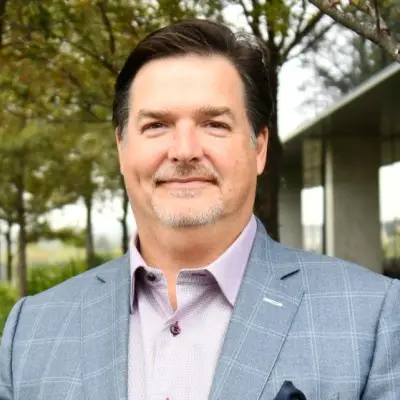
Biography- Steve
Steve C. Morang, MBA, CFE, CIA, CCEP, is an Associate Principal at Spire Consulting Group, where he leads the Forensic Accounting & Fraud Advisory practice. With over 30 years of experience, Steve is a nationally recognized expert in forensic investigations, risk management, and corporate compliance. He is the co-founder of The Seduction of Fraud, a groundbreaking research initiative and behavioral framework exploring the psychological and ethical dimensions of white-collar crime. A frequent industry speaker, author, and Adjunct Professor at Golden Gate University, Steve brings deep expertise in decoding why people commit fraud and how organizations can prevent it.

Biography- Sanya
Sanya Morang is the founder of The Seduction of Fraud, bringing a unique multi-disciplinary background in psychology, marketing, and education to the study of financial crime. Alongside her husband, Steve, she co-developed The Seduction of Fraud Diamond, an innovative behavioral methodology designed to decode the complex human nature, ethics, and psychology behind deceptive behavior. Beyond her corporate and research work, Sanya is a writer currently publishing her debut novel, In Conversation with Eternity, a reflective piece anchored in themes of faith, hope, and love. She resides on a family farm in Texas, where her writing, spiritual life, and daily routine beautifully intersect.
Course Description
As recent global enforcement actions against multi-million dollar procurement cartels and bid-rigging schemes demonstrate, heavy civil and infrastructure projects remain highly vulnerable to financial crime despite strict corporate compliance programs. This session, presented by Steve and Sanya Morang, shifts the focus from traditional internal control checklists to the underlying human element. Utilizing The Seduction of Fraud Diamond methodology, we look beyond the classic fraud triangle to examine the behavioral, psychological, and ethical factors that quietly pull individuals toward misconduct on complex projects. Attendees will learn to spot early behavioral red flags and protect project budgets from the subtle psychological lures of fraud.
1:55 PM – 2:45 PM
Transforming Construction Payment Reviews with Intelligent Audit Technology
Speakers: Ruhtab Sahota & Curt Plyler

Biography
Ruhtab Sahota is a Founder of Fort Hill LogiX, a construction payment and contract assurance platform designed to strengthen how owners and auditors evaluate construction costs. His work focuses on construction audit, contract compliance, payment application review, cost recovery, and the application of intelligent technology to capital-project assurance. Drawing on practical experience reviewing complex construction contracts, GMP arrangements, payment applications, change orders, supporting cost documentation, and project financial controls, Ruhtab has helped develop methodologies that combine construction audit expertise with full-population analytical testing. His current work focuses on moving construction payment review from periodic, sample-based analysis toward continuous financial assurance—using technology to increase testing coverage, consistency, traceability, and speed while retaining professional judgment and human validation.

Biography
Curt Plyler, CFA, CCA is a founding partner and Principal of Fort Hill Associates, LLC and a Founder of Fort Hill LogiX. With more than 20 years of experience in construction auditing and financial leadership, Curt specializes in helping owners of large, complex capital projects strengthen financial oversight, improve contract compliance, and manage construction costs.
At Fort Hill Associates, Curt has played an integral role in developing the firm’s construction audit practice and growth strategy, particularly within the healthcare and higher education sectors. He has served as Engagement Manager or Audit Manager for organizations including Duke University, UNC Health, the University of North Carolina System, Virginia Tech, Wake Forest University, WakeMed Health & Hospitals, and the University of Pittsburgh Medical Center. He also leads Fort Hill’s involvement with industry organizations including the American Bar Association, Association of College and University Auditors, and Construction Owners Association of America.
Curt is also helping lead Fort Hill LogiX, an AI-assisted construction auditing platform developed from Fort Hill’s decades of real-world construction audit experience. LogiX applies intelligent automation and human oversight to payment applications, project financial data, and contract requirements, helping project teams identify anomalies and compliance issues earlier in the construction lifecycle.
Curt is a CFA charterholder and Certified Construction Auditor (CCA) and has contributed articles and publications on construction cost control, contract compliance, project controls, and construction auditing.
Course Description
Construction payment reviews are traditionally performed through manual reconciliation, document sampling, spreadsheet analysis, and periodic audit procedures—often after significant amounts have already been paid. Emerging intelligent audit technologies create an opportunity to move portions of this work closer to the point of payment and evaluate a much broader population of project data. This session will examine how construction auditors can apply technology to payment applications, schedules of values, prior billings, supporting documentation, change orders, and contractual requirements to identify potential billing inconsistencies, unsupported costs, calculation errors, and contract compliance issues earlier. Using practical construction examples, the session will explore how full-population analytical testing, contract-driven audit procedures, exception-based review, and human validation can work together to create a continuous financial assurance model. The discussion will also address where artificial intelligence can assist the audit process, where deterministic testing and professional judgment remain essential, and how auditors can preserve traceability and defensibility as technology becomes more integrated into construction assurance.
3:00 PM – 3:50 PM
Information as Mortar: UK Lessons on Compounding Trust and Knowledge in Delivery
Speaker: Mohammad "Mo" Shana'a

Biography
Mo Shana’a is the co-founder and CEO of Morta (morta.io), a secure, connected platform for managing the work and information involved in delivering and operating buildings and infrastructure. Morta replaces the spreadsheets projects actually run on, connecting the work, the people doing it, and the technology around them, and is implemented across $100Bn+ of projects in 14 countries. A civil engineer by background, Mo worked on large infrastructure projects before founding Morta as an independent, bootstrapped company. He serves on the UK Department for Business and Trade’s Digital Construction Exports Steering Group and the Information Management Initiative Task Group, national efforts to advance how the industry creates, governs, and shares information.
His expertise is shaped by a combination of practical and academic experience, industry involvement, and a commitment to mentorship. Throughout his career, Vincent has collaborated with leading national and international architects and engineers, gaining deep insight into their methodologies and creative processes. While he values design intent and innovation, he remains steadfast in ensuring critical building functionality and cost efficiency. His portfolio spans both public and private sector projects, where he has represented developers, family offices, owners, and construction managers. This diverse experience has honed his ability to lead design and construction teams, consistently delivering exceptional value throughout the project lifecycle.
Course Description
Construction pays for its work many times over: once to do it, then again to verify it, reconcile it and reconstruct what happened. This is the work around the work. Drawing on lessons from implementations across $100Bn+ of projects in 14 countries, this talk explores what digital construction and information management have got right and wrong. At its heart is a different relationship with information: treating it not in silos around individual teams, systems and processes, but as the mortar that connects people, work and technology. The talk will show how we can move to assurance built into delivery rather than bolted on afterwards, so projects create trusted information and reusable knowledge as a by-product of doing the work.
3:50 PM – 4:50 PM
Where Construction Projects Leak Money
Speakers: Valerie Smith & Laura Tatem

Biography- Valerie
Valerie Smith is the Audit Director for the Audit and Advisory division of HPM. She has worked in the construction and real estate industry since 1996 for general contracting and accounting firms. Formerly a senior financial analyst, division controller and assistant regional controller for one of the nation’s largest commercial general contractors, Valerie has performed hundreds of operational and construction cost audits and payment application analyses related to construction activities for transportation agencies, healthcare, education, commercial and hospitality facilities, and public utilities. Valerie has provided risk assessment services and contract and control reviews and performed and managed government compliance reviews including analysis of prepared indirect rates, cost segregation, reconciliation of interim billings to cost accounts, billing compliance with contract provisions, and preparation of policies and procedures to ensure regulatory and contract compliance. Valerie is a Certified Construction Auditor and a member of the National Association of Construction Auditors and The Institute of Construction Advisors & Consultants.
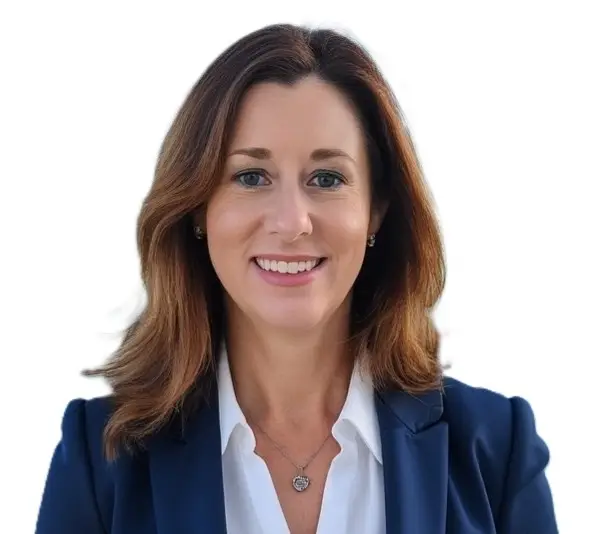
Biography- Laura
Laura Tatem is an Audit Manager in the Audit and Advisory division of HPM focusing on pre, interim, and final audits of various sizes and types of construction projects. She leads complex construction audits across hospitality, healthcare, government, sports, and technology sectors, often delivering significant cost recoveries. Her technical expertise includes contract compliance, change order review, cost verification, risk analysis, and internal controls review throughout the project lifecycle. She is the former Vice President of Internal Audit for Tampa International Airport, where she led the Audit Department and was heavily involved with the never-ending cycle of large construction projects. Prior to internal audit, she worked as an external auditor for nine years primarily in the fields of government, non-profit, construction and real estate. Laura is a Certified Public Accountant, Certified Internal Auditor, and Certified Construction Auditor. She is a member of various professional organizations including the National Association of Construction Auditors, Institute of Construction Advisors & Consultants, and Institute of Internal Auditors.
Course Description
Construction projects often lose money through a series of small issues rather than a single major failure. Drawing on real-world construction audit and advisory experience, this session explores common sources of cost leakage throughout the project lifecycle, including change management, contract compliance, labor and equipment costs, and project closeout. Attendees will learn how to identify financial risks early, strengthen project controls, and improve outcomes for all project stakeholders.
4:50 PM – 5:00 PM
Executive Director Day One Closing Remarks
DAY TWO
7:45AM – 8:30 AM
Breakfast
Conference Lobby – 4th Floor
8:30 AM – 9:30 AM
The Arrows Analysis Engine: Algorithmic Delay Analysis with Steelray Delay Analyzer
Speaker: Brian Leach
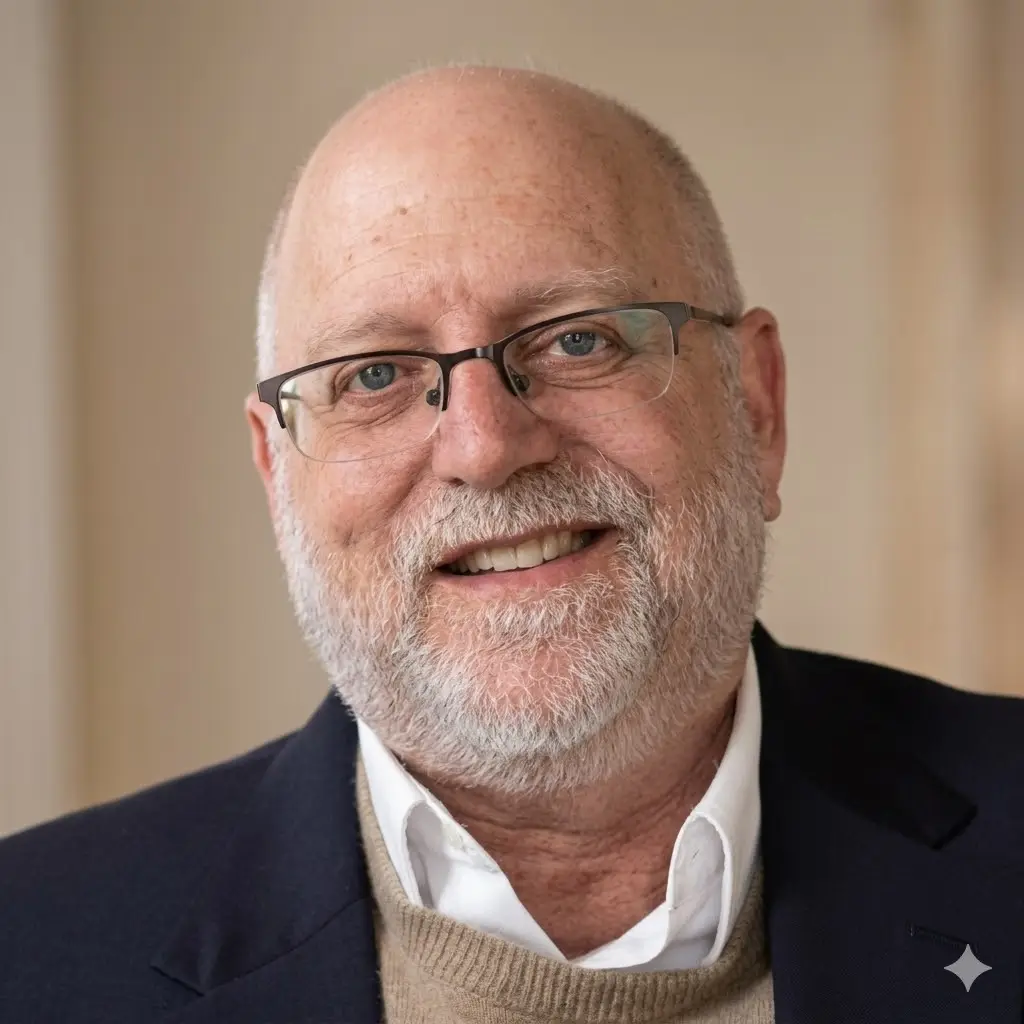
Biography
Brian Leach is the founder and CEO of Steelray Software. He has degrees in Computer Science from Emory University and Georgia Tech. He has spent most of his career focused on project schedule visualization and analysis. Brian was instrumental in the development of the first project viewer for Microsoft Project, the first schedule health software for Microsoft Project, the first product to implement the DCMA schedule checks, and the leading solution for forensic schedule delay analysis. Based in Atlanta, Brian enjoys hiking in the North Georgia mountains, playing guitar, and no-limit Texas Hold’em poker.
Course Description
Forensic delay analysis in complex schedules often presents the challenge of distinguishing critical project impacts from hundreds of minor schedule variations within a given window. This presentation introduces Arrows Analysis, an algorithmic methodology built into Steelray Delay Analyzer, designed to provide schedulers with a fair, logic-driven approach to measuring activity delays and determining true project finish impact. The presentation breaks down the core components of the analysis model: independent activity delay modeling, impact and rebuilt critical path determination, interactive “But-For” scenario testing, and visual reporting.
9:30 AM – 10:30 AM
The Institute of Construction Advisors & Consultants Advisory Board Member Round Table
10:45 AM – 11:45 AM
Identifying Time Driven Costs in Construction Delay Damages
Speakers: Anne Anderson & Sam Hadley
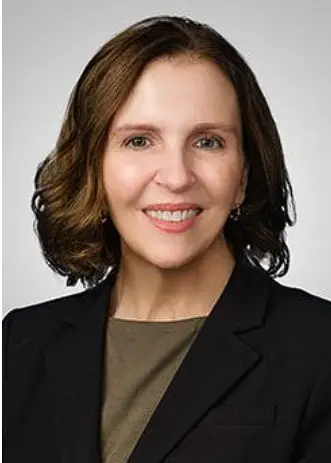
Biography- Anne
Anne Anderson has 25 years’ experience in accounting, Certified Forensic Examiner. Employed as a Manager on the Damages team of Capital Project Management, Inc. Experience includes: claims preparation and evaluation involving damages, increased costs due to delays and inefficiencies, construction project evaluation involving change order reviews, GMP project reconciliations. Provide written reports, trial, hearing and arbitration support, participate in mediations.

Biography- Sam
Sam Hadley is a Certified Public Accountant, Certified in Financial Forensics, Certified Government Financial Manager, Certified Fraud Examiner, Certified Construction Control Professional, Certified Construction Auditor. Principal at Capital Project Management, Inc. with 30 years’ experience, including: claims preparation and evaluation involving damages, lost profits, replacement costs and increased costs due to delays and inefficiencies, construction project evaluation involving change order reviews, GMP project reconciliations, and contract compliance issues. Extensive experience providing written reports, deposition, trial/hearing/arbitration testimony, participating in mediations, and presenting affirmative claims or rebuttal opinions orally.
Course Description
This session will discuss how a contractor can accumulate damages due to delay using a daily rate delay claim. We will review the types of costs that are included in a daily rate and how to identify them, as well as the types of costs that are not appropriate to include in a daily rate and how to identify them.
11:45 AM – 12:30 PM
Lunch
12:30 PM – 1:20 PM
AI Is a Multiplier. What Are You Multiplying?
Speaker: Tyler Campbell

Biography
Tyler Campbell is the founder of FieldProof and has spent his whole career in construction, including a decade in BIM. He co-hosted the Construction Brothers podcast. Every construction business has waste in it. Some hides in the process, some hides in the technology, and most of it hides in the seams where the two don’t line up. FieldProof hunts that waste down, puts a number on it, and eliminates it in the right order. No software to sell. Just the outside set of eyes asking “help me understand why you do it that way,” because that’s usually where the money is hiding. Tyler lives in Georgia with his wife and two kids, loves mountain biking when he’s not deep in a Claude Code session.
Course Description
AI is a multiplier, which is terrible news. Point it at a workflow that works and you get more of what works. Point it at a workflow nobody designed, and you get a bigger mess faster, and with more confidence behind it. Most project teams already own more capability than they realize. The usual read is that the tool failed. It usually didn’t. Nobody designed the process around it, nobody was trained on it, nobody owns the space between the disciplines, and the workflow reverts to email and spreadsheets the first time a project gets busy. This session shows how to find those gaps and put a dollar figure on them. Then the real question: is this something a tool you already own can do, something worth building, or something AI should handle? Getting that order right is what makes an AI deployment reliable instead of expensive.
1:20 PM – 2:10 PM
The impact change orders have on specific project delivery methods
Speaker: Vincent Salvatoriello

Biography
Vincent Salvatoriello is a highly experienced design and construction professional with a strong presence in the New York City market and across North America. With a career spanning over 30 years, he has continually advanced in mechanical engineering, engineering management, construction management, and project/program management. A firm advocate of “Building Smart Solutions,” Vincent is dedicated to optimizing methodologies and leveraging cutting-edge technology to enhance productivity and efficiency.
His expertise is shaped by a combination of practical and academic experience, industry involvement, and a commitment to mentorship. Throughout his career, Vincent has collaborated with leading national and international architects and engineers, gaining deep insight into their methodologies and creative processes. While he values design intent and innovation, he remains steadfast in ensuring critical building functionality and cost efficiency. His portfolio spans both public and private sector projects, where he has represented developers, family offices, owners, and construction managers. This diverse experience has honed his ability to lead design and construction teams, consistently delivering exceptional value throughout the project lifecycle.
Course Description
Change orders can significantly affect project cost, schedule, risk allocation, and stakeholder relationships; however, their causes and consequences vary considerably depending on the project delivery method. This session will examine how change orders arise and are managed under design-bid-build, design-build, construction manager at risk, and other commonly used delivery models. Attendees will gain practical insight into contractual responsibilities, risk allocation, pricing and schedule implications, documentation requirements, and effective strategies for preventing disputes and minimizing the impact of change throughout the project lifecycle.
2:30 PM – 4:10 PM
Beyond the Chatbot: A Practical Roadmap for Enterprise AI in Construction
Speaker: Hugh Seaton

Biography
Hugh Seaton is an AI consultant helping construction and AEC leaders turn artificial intelligence into working practice. Former GM at the Construction Specifications Institute, and two time construction AI startup founder, Hugh has been building AI systems and products for over a decade, and consulting for associations and contractors for the last four.
Hugh is the author of AI in Construction, Leading Change, First Edition (2026), The Construction Technology Handbook (Wiley, 2021) and host of the Constructed Futures podcast, and developed Procore’s Data in Construction, and AI in Construction e-learning modules. He lives in Austin, Texas.
His expertise is shaped by a combination of practical and academic experience, industry involvement, and a commitment to mentorship. Throughout his career, Vincent has collaborated with leading national and international architects and engineers, gaining deep insight into their methodologies and creative processes. While he values design intent and innovation, he remains steadfast in ensuring critical building functionality and cost efficiency. His portfolio spans both public and private sector projects, where he has represented developers, family offices, owners, and construction managers. This diverse experience has honed his ability to lead design and construction teams, consistently delivering exceptional value throughout the project lifecycle.
Course Description
In this highly interactive session, attendees will learn frameworks for thinking about AI as a general purpose technology in the early stages of its evolution, including opportunities and limits. Material will be presented interspersed with small group exercises to quickly apply ideas in real time to short projects which are shared with the group. Attendees will leave with actionable ideas they can share with AEC clients and their own teams.
The presentation will end with a discussion of enterprise-level AI, moving beyond basic chatbot usage to explain what AI might look like for contractors by 2028.
4:10 PM – 5:00 PM
When the System Doesn't Fit the Work
Speaker: Nicholas Johnson

Biography
Nicholas Johnson is Chief Evangelist at Kahua, bringing more than 40 years of experience across architecture, engineering, construction, and construction technology. In his role, he engages with owners, capital program leaders, and industry professionals to explore how technology, connected data, and emerging AI can improve project delivery and long-term asset performance.
Nicholas began his career as an electrical designer and drafter and was an early adopter of CAD/CAM technology. He later moved into IT at Heery International, where he gained firsthand experience with construction project management software before joining Constructware, an early construction technology company that was later acquired by Autodesk. Throughout his career, Nicholas has held leadership roles at Constructware, Autodesk, Trimble Connected Water, Beck Technology, and Trimble e-Builder.
Today, he shares practical perspectives on construction technology, project controls, owner-led capital programs, asset lifecycle management, and the future of the built environment. He also moderates Kahua’s Build Different podcast and industry conversations on the challenges and opportunities shaping capital project delivery.
Course Description
How configurability, connected data and AI are changing the construction technology equation.
Construction organizations have invested heavily in sophisticated project management technology. Yet critical work still happens outside those systems—in spreadsheets, email, custom tools and manual processes—requiring additional people and effort to connect the pieces.
Why?
Underutilization isn’t always an adoption problem. Sometimes, it’s a platform-fit problem.
Every owner operates differently. Every capital program has different requirements. And projects evolve over time. When technology can’t adapt to those differences, teams either adapt their processes to the software or move work outside the system—undermining the efficiencies the technology was intended to create.
This session will explore what organizations should expect from the next generation of construction technology and how leaders can evaluate whether their current environment is prepared for what’s next. We’ll examine why configurability, connected workflows and interoperability are becoming critical requirements; how to identify work that has escaped the system; and when organizations should optimize, extend or rethink their technology approach.
We’ll also explore how embedded AI is raising the bar. As intelligence becomes part of everyday workflows, organizations will need more than AI features—they’ll need connected, governed platforms that understand the context of their projects and can evolve as their needs change.
Attendees will leave with a practical framework for evaluating whether their technology is truly built around how their organization works today—and whether it can adapt to how they’ll need to work tomorrow.